Managed IT Services vs. Holiday Panic Mode: Which Is Better for Your Growing Business During the Busiest Season of 2025?
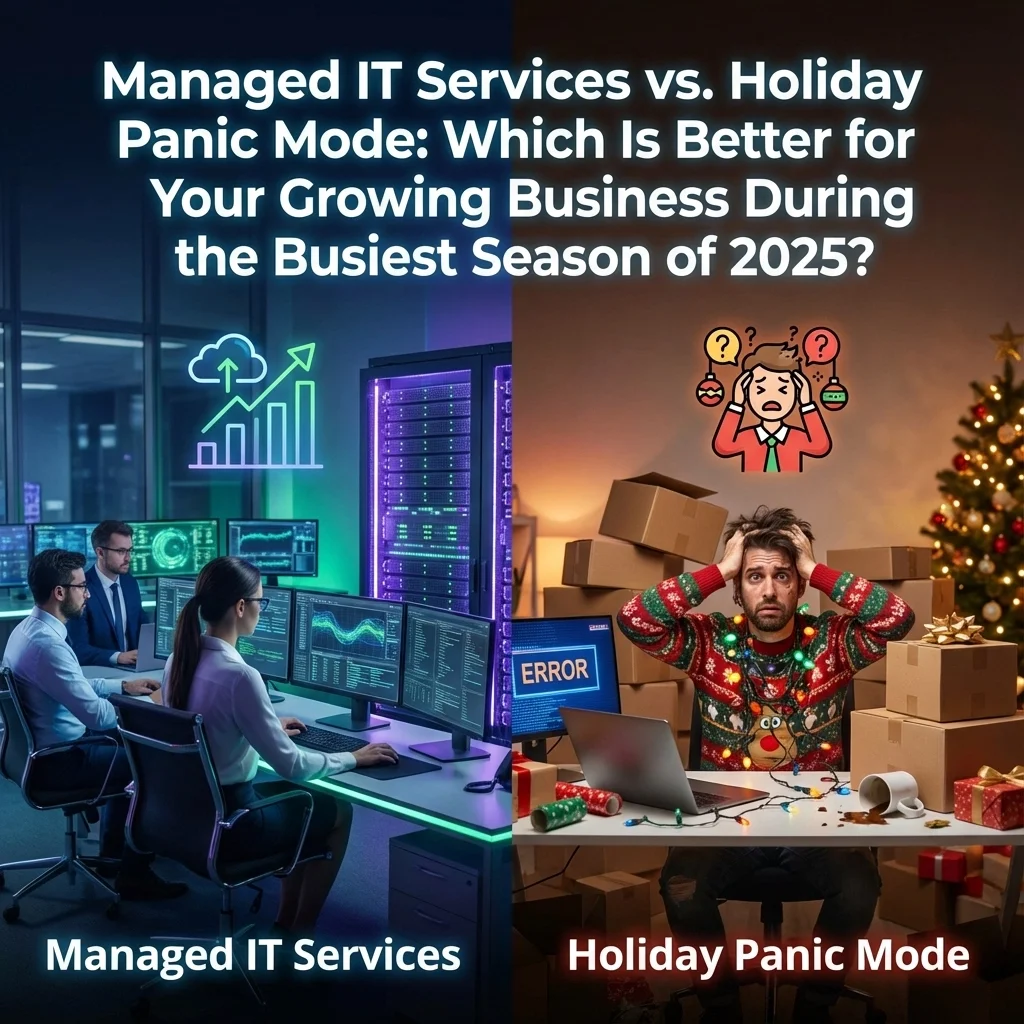
December 22nd, 2025. Right now, millions of businesses are in the thick of their most critical revenue period of the year. While some companies are smoothly processing orders, handling increased web traffic, and maintaining seamless operations, others are scrambling to fix crashed systems, restore lost data, and apologize to frustrated customers.
The difference? One group invested in managed IT services. The other is trapped in holiday panic mode.
For growing businesses, this decision between proactive IT management and reactive crisis response can make or break your entire fourth quarter. Let's examine which approach actually saves money, protects revenue, and positions your business for success during the most demanding season of 2025.
What Exactly Is "Holiday Panic Mode"?
Holiday panic mode isn't a business strategy: it's what happens when you don't have one. This reactive approach means your team only addresses IT problems after they've already damaged your business operations.
Holiday panic mode looks like:
• System crashes during peak shopping hours when your servers can't handle increased traffic
• Emergency IT calls at 2 AM when your e-commerce site goes down during Black Friday weekend
• Frantic password resets when employees can't access critical systems during end-of-year processing
• Data loss scares when backup systems fail during your busiest transaction period
• Security breaches going undetected while you're focused on sales volume
• Manual workarounds eating up employee time that should be spent on revenue-generating activities

The hidden costs of panic mode extend far beyond emergency repair bills. Every minute of downtime during the holiday season represents lost sales, damaged customer relationships, and stressed employees who can't focus on their core responsibilities.
The Managed IT Services Alternative: Proactive Holiday Success
Managed IT services flip the script entirely. Instead of reacting to disasters, managed service providers (MSPs) prevent them from happening in the first place.
Here's how managed IT services work during peak season:
• 24/7 system monitoring identifies potential problems before they impact your business
• Proactive maintenance ensures your infrastructure can handle holiday traffic surges
• Scalable resources automatically adjust to meet increased demand during busy periods
• Expert security oversight protects customer data when transaction volumes spike
• Immediate technical support resolves issues within minutes instead of hours or days
• Predictable monthly costs eliminate surprise emergency expenses during your busiest season
The managed services advantage becomes crystal clear during holidays. While your competitors are firefighting technical emergencies, your team stays focused on what actually drives revenue: serving customers, processing orders, and growing your business.
The Real Cost Comparison: Beyond the Monthly Fee
Many growing businesses assume that avoiding managed IT services saves money. The mathematics tell a different story, especially during the holiday season.
Managed IT Services Costs:
• Fixed monthly investment: $500-$2,500+ per month depending on business size
• Predictable budgeting: No surprise expenses during peak season
• Included services: Monitoring, maintenance, security, support, and disaster recovery
• Productivity protection: Employees focus on revenue activities instead of IT troubleshooting
Holiday Panic Mode Costs:
• Emergency repair calls: $150-$300 per hour, often during premium holiday rates
• System downtime: Lost sales averaging $5,000-$50,000 per hour for e-commerce businesses
• Data recovery services: $1,000-$15,000 for emergency data restoration
• Security breach response: $50,000-$500,000 in average costs including customer notification and legal compliance
• Employee overtime: Premium pay for staff working nights and weekends fixing technical problems
• Lost customer trust: Immeasurable long-term revenue impact from poor holiday experiences
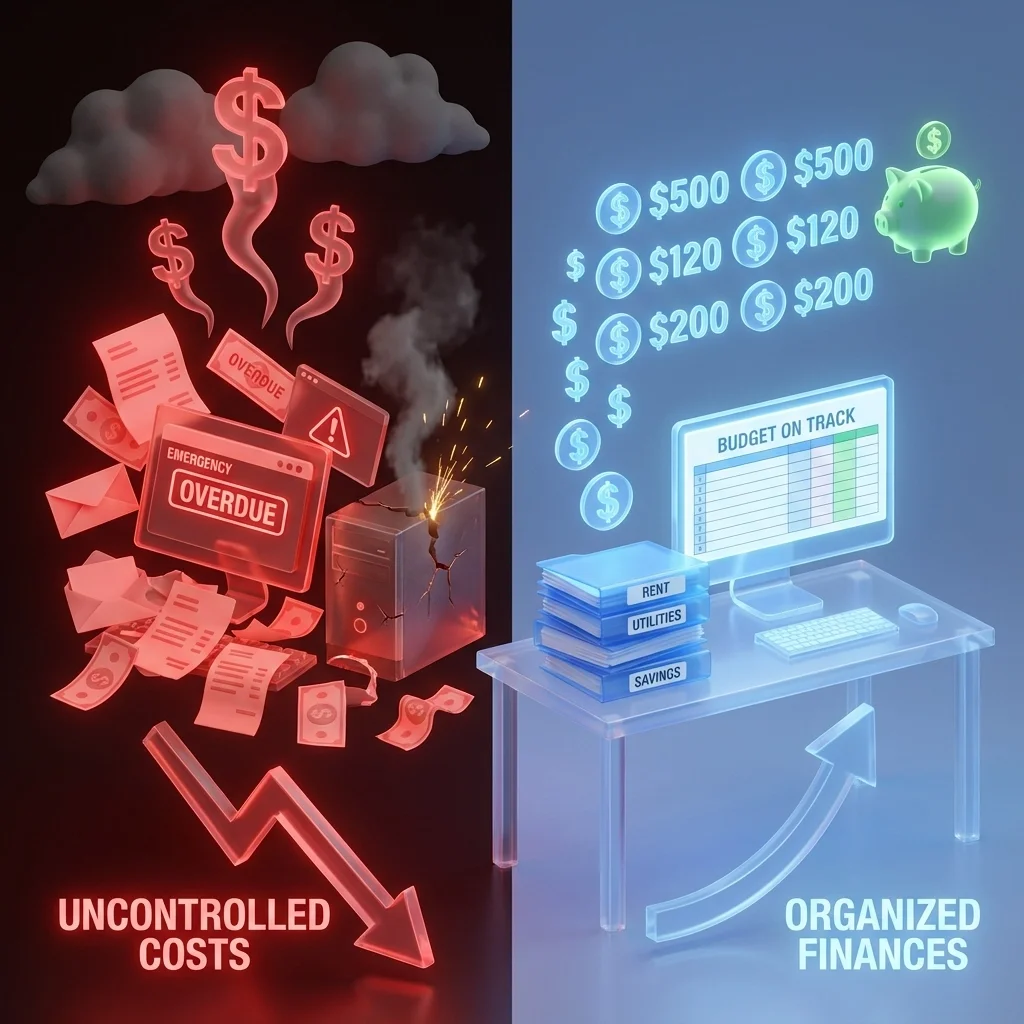
The reality check: A single major system failure during the holidays can cost more than an entire year of managed IT services. When you factor in lost sales, emergency repairs, and damaged customer relationships, managed services become the clear financial winner.
Holiday Season Scenarios: How Each Approach Handles Peak Pressure
Scenario 1: E-Commerce Traffic Surge on Cyber Monday
Panic Mode Response: Your website crashes at 10 AM when traffic increases 500%. You scramble to contact your web hosting company, but they're overwhelmed with similar calls. Your site stays down for 6 hours during peak shopping time. Lost revenue: $25,000
Managed Services Response: Your MSP's monitoring systems detect the traffic surge at 9:55 AM and automatically scale your server resources. Your site handles the increased load seamlessly. Lost revenue: $0
Scenario 2: Point-of-Sale System Failure During Weekend Rush
Panic Mode Response: Your retail POS system freezes on Saturday afternoon. No IT support is available until Monday morning. You process sales manually with paper receipts, creating inventory chaos and frustrated customers. Weekend sales down 40%
Managed Services Response: Your MSP receives automatic alerts about the POS issue and remotely resolves it within 15 minutes. Sales continue without interruption. No revenue loss
Scenario 3: Ransomware Attack During Year-End Processing
Panic Mode Response: Cybercriminals encrypt your customer database on December 20th. You discover the breach after customers complain about charged orders they never received. Emergency data recovery costs $8,000, plus legal fees and customer compensation. Total cost: $35,000
Managed Services Response: Advanced security monitoring detects suspicious network activity immediately and isolates the threat before any data is compromised. Damage prevented: $35,000
Why Growing Businesses Choose Managed IT Services for the Holidays
Growing businesses face unique challenges during peak season. You need systems that grow with you, not break under pressure.
Key advantages for growing companies:
• Scalable infrastructure that automatically adjusts to increased demand
• Expert compliance support for handling sensitive customer data during high-volume periods
• 24/7 technical support when your internal team is focused on core business growth
• Predictable IT budgets that don't spike during your most important revenue season
• Professional disaster recovery ensuring business continuity even during unexpected problems
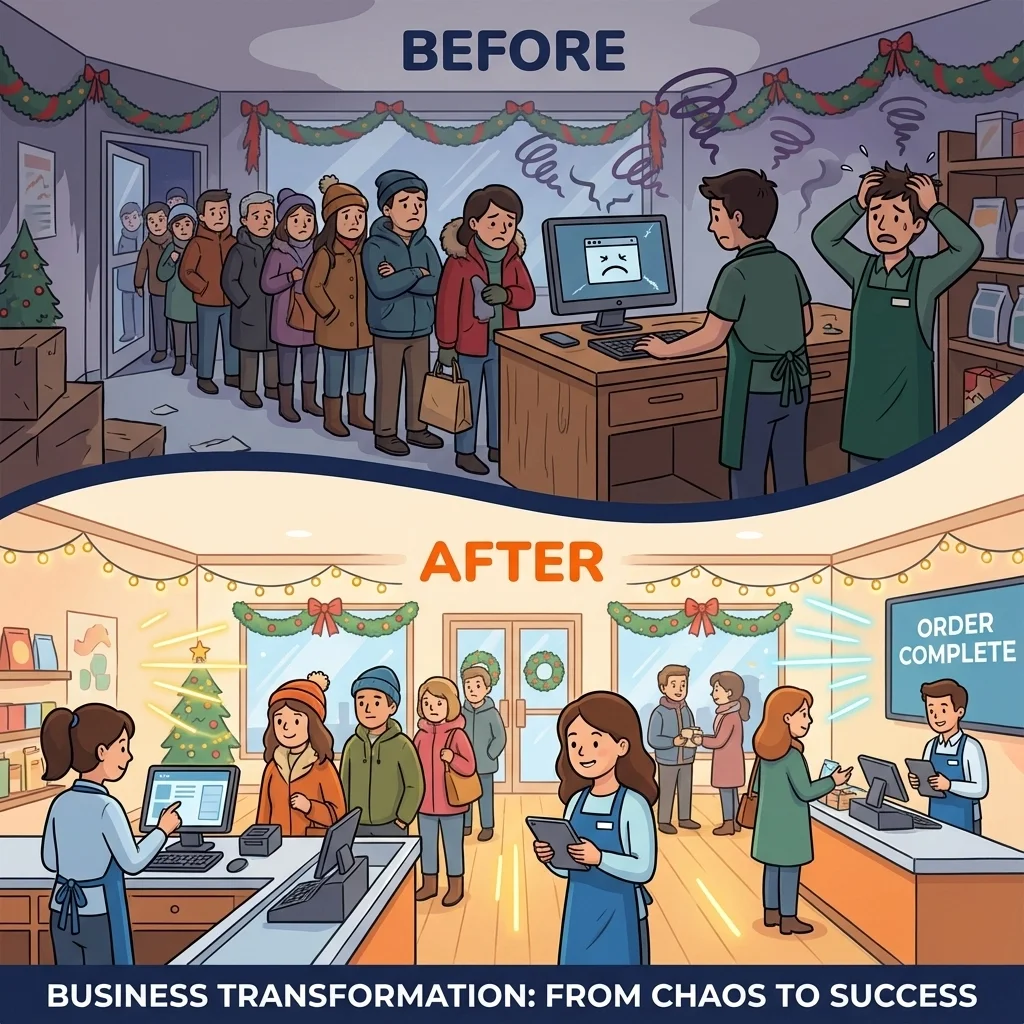
Real-world success story: A growing online retailer was spending $3,000 monthly on emergency IT fixes during previous holiday seasons. After switching to managed services for $1,200 per month, they eliminated downtime completely and increased holiday revenue by 35% because their team could focus entirely on marketing and customer service instead of technical problems.
The reality check: A single major system failure during the holidays can cost more than an entire year of managed IT services. When you factor in lost sales, emergency repairs, and damaged customer relationships, managed services become the clear financial winner.
Holiday Season Scenarios: How Each Approach Handles Peak Pressure
Scenario 1: E-Commerce Traffic Surge on Cyber Monday
Panic Mode Response: Your website crashes at 10 AM when traffic increases 500%. You scramble to contact your web hosting company, but they're overwhelmed with similar calls. Your site stays down for 6 hours during peak shopping time. Lost revenue: $25,000
Managed Services Response: Your MSP's monitoring systems detect the traffic surge at 9:55 AM and automatically scale your server resources. Your site handles the increased load seamlessly. Lost revenue: $0
Scenario 2: Point-of-Sale System Failure During Weekend Rush
Panic Mode Response: Your retail POS system freezes on Saturday afternoon. No IT support is available until Monday morning. You process sales manually with paper receipts, creating inventory chaos and frustrated customers. Weekend sales down 40%
Managed Services Response: Your MSP receives automatic alerts about the POS issue and remotely resolves it within 15 minutes. Sales continue without interruption. No revenue loss
Scenario 3: Ransomware Attack During Year-End Processing
Panic Mode Response: Cybercriminals encrypt your customer database on December 20th. You discover the breach after customers complain about charged orders they never received. Emergency data recovery costs $8,000, plus legal fees and customer compensation. Total cost: $35,000
Managed Services Response: Advanced security monitoring detects suspicious network activity immediately and isolates the threat before any data is compromised. Damage prevented: $35,000
Why Growing Businesses Choose Managed IT Services for the Holidays
Growing businesses face unique challenges during peak season. You need systems that grow with you, not break under pressure.
Key advantages for growing companies:
• Scalable infrastructure that automatically adjusts to increased demand
• Expert compliance support for handling sensitive customer data during high-volume periods
• 24/7 technical support when your internal team is focused on core business growth
• Predictable IT budgets that don't spike during your most important revenue season
• Professional disaster recovery ensuring business continuity even during unexpected problems
Real-world success story: A growing online retailer was spending $3,000 monthly on emergency IT fixes during previous holiday seasons. After switching to managed services for $1,200 per month, they eliminated downtime completely and increased holiday revenue by 35% because their team could focus entirely on marketing and customer service instead of technical problems.